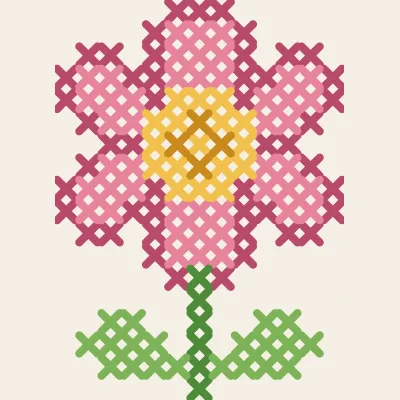
Garden Flower
A pink bloom on a stem with two leaves, 13×18 stitches.
Flowers, leaves and potted plants in small, symmetric charts. Stitch one as a card, repeat one as a border, or gather several into a botanical sampler.
6 free patterns · PDF, PNG and editable chart
A pink bloom on a stem with two leaves, 13×18 stitches.
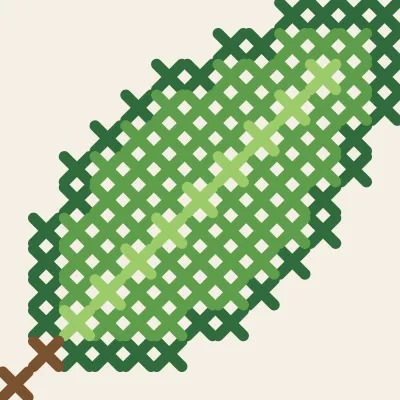
A diagonal leaf with a light central vein, 13×13.
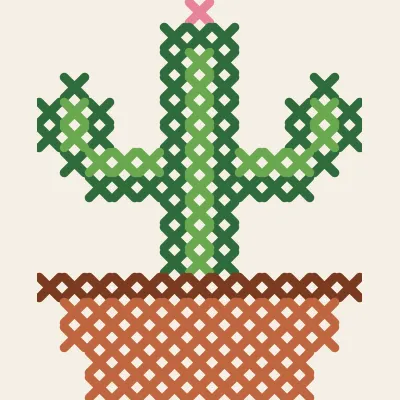
A flowering cactus in a terracotta pot, 13×16.
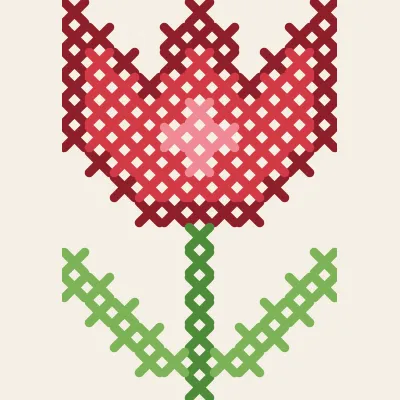
A single tulip with a long stem and two leaves, 11×16.
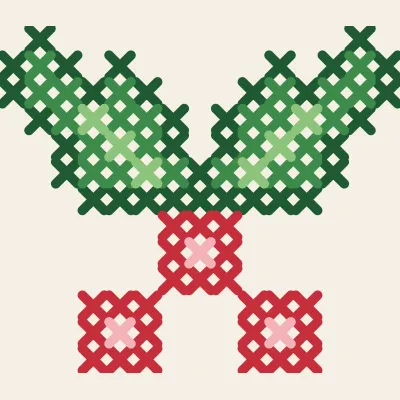
Two spiky holly leaves over three red berries, 15×13.
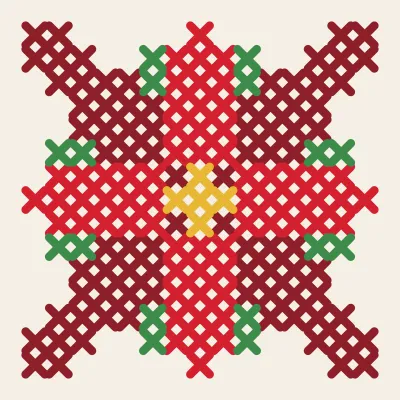
A red poinsettia with eight pointed bracts and green leaves, 17×17.
Most of these designs are symmetric, which makes them easy to count: one half is the mirror of the other, so a mistake shows up at once. It also makes them good building blocks. A tulip repeated five times with two empty squares between each becomes a border for a towel or a bookmark.
The greens are shared across the set, so stems and leaves match when you combine motifs. Petal colours are easy to change in the Studio if you want yellow tulips or a white flower on coloured fabric.
Smallest first. Finished size is on 14-count Aida; times assume about 120 full stitches an hour, a relaxed pace, so treat them as a guide and allow more for a first project.
| Pattern | Stitches (w × h) | On 14‑count | Colours | Total stitches | Rough time |
|---|---|---|---|---|---|
| Holly Sprig | 15 × 13 | 1.1 × 0.9 in 2.7 × 2.4 cm | 5 | 91 | under 1 hour |
| Autumn Leaf | 13 × 13 | 0.9 × 0.9 in 2.4 × 2.4 cm | 4 | 95 | under 1 hour |
| Red Tulip | 11 × 16 | 0.8 × 1.1 in 2.0 × 2.9 cm | 5 | 98 | under 1 hour |
| Potted Cactus | 13 × 16 | 0.9 × 1.1 in 2.4 × 2.9 cm | 5 | 112 | about 1 hour |
| Garden Flower | 13 × 18 | 0.9 × 1.3 in 2.4 × 3.3 cm | 6 | 142 | about 1 hour |
| Poinsettia | 17 × 17 | 1.2 × 1.2 in 3.1 × 3.1 cm | 4 | 169 | about 1 hour |
Yes. Open the pattern in the Studio, select a colour in the palette and choose a new one. The chart, the key and the thread suggestions all update.
Copy the motif in the Studio and paste it at regular intervals, or stitch the same chart several times, counting the same number of empty squares between each repeat.
Each colour shows its nearest DMC stranded cotton as a suggestion, and the Studio can snap a whole pattern to DMC colours. They are computed matches, so compare with real thread before buying a large quantity.