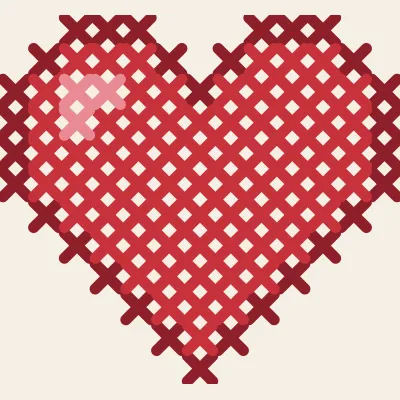
Little Heart
A 13×12 heart in three reds with a small highlight.
Beginner collection
A first pattern should be small, use few colours, and have solid areas rather than scattered single stitches. These designs were chosen against exactly those criteria.
| Criterion | Why it matters |
|---|---|
| 5 colours or fewer | Fewer thread changes and fewer symbols to learn. |
| Under 30 stitches on the longest side | Small enough to finish quickly (about 2 in or less on 14-count). |
| Solid regions, outline shapes | Long runs of one colour build rhythm; outlines make counting easier. |
| Few isolated stitches | Each lone stitch needs its own start and finish. |
A 13×12 heart in three reds with a small highlight.
Why it works
Large solid areas, only three colours and a clear outline make this an ideal first chart.
13 × 12 stitches · 3 colours · 104 stitches · about 0.9 × 0.9 in on 14-count
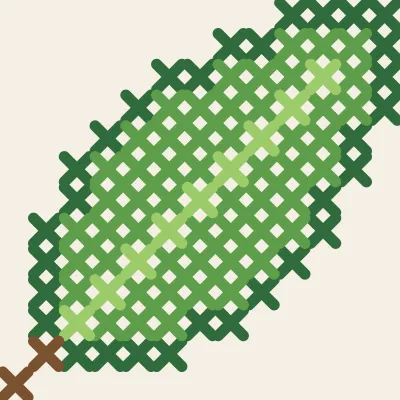
A diagonal leaf with a light central vein, 13×13.
Why it works
Four colours and one simple shape; the vein is a single line that is easy to follow.
13 × 13 stitches · 4 colours · 95 stitches · about 0.9 × 0.9 in on 14-count
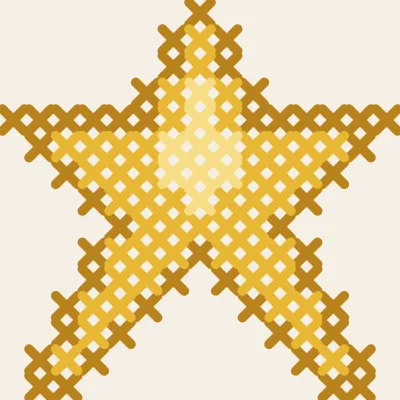
A five-point star in three golds, 15×15.
Why it works
Only three colours. The points are narrow, so count carefully at the tips.
15 × 15 stitches · 3 colours · 108 stitches · about 1.1 × 1.1 in on 14-count
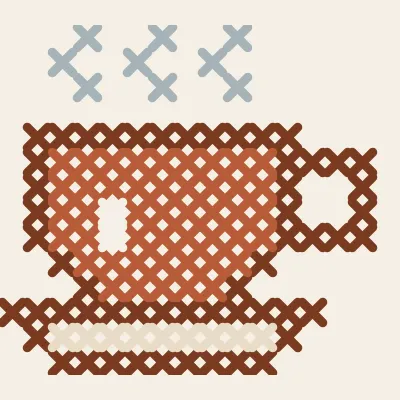
A terracotta cup on a saucer with steam, 16×14.
Why it works
Solid shapes in four colours. The steam lines are optional if you want an even simpler start.
16 × 14 stitches · 5 colours · 121 stitches · about 1.1 × 1.0 in on 14-count
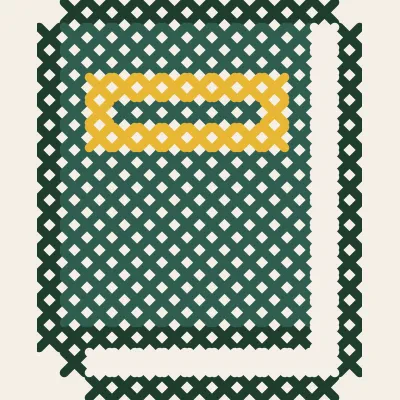
A standing hardback with a gold title band, 13×16.
Why it works
Straight lines and rectangles only. Long rows of one colour make counting simple.
13 × 16 stitches · 4 colours · 202 stitches · about 0.9 × 1.1 in on 14-count
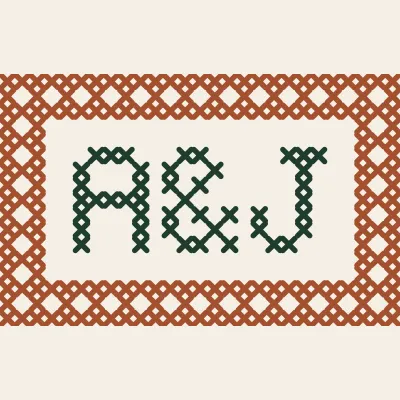
Two initials joined by an ampersand inside a geometric frame.
Why it works
Two colours only. Lettering is made of straight runs, and the frame repeats a simple rhythm.
27 × 17 stitches · 2 colours · 235 stitches · about 1.9 × 1.2 in on 14-count
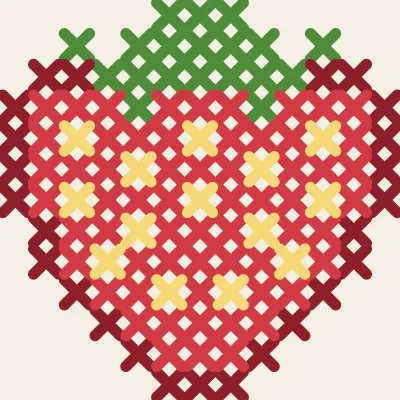
A plump strawberry with seeds and a leafy top, 13×13.
Why it works
Four colours. The seeds are single stitches inside a solid fill, so they never need a separate thread run.
13 × 13 stitches · 4 colours · 119 stitches · about 0.9 × 0.9 in on 14-count
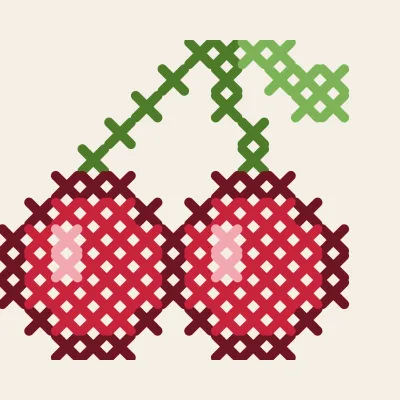
Two shiny cherries on joined stems with a leaf, 15×12.
Why it works
The stems are thin diagonal lines; stitch them last, after the solid cherries.
15 × 12 stitches · 5 colours · 88 stitches · about 1.1 × 0.9 in on 14-count
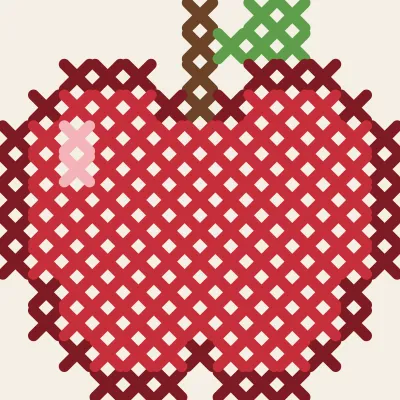
A shiny apple with a stem and leaf, 13×13.
Why it works
Large solid areas in five colours. A comfortable first project.
13 × 13 stitches · 5 colours · 127 stitches · about 0.9 × 0.9 in on 14-count
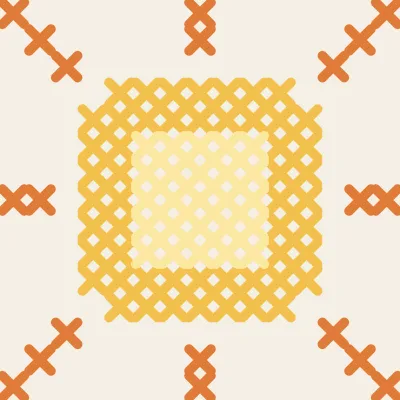
A round sun with straight and diagonal rays, 15×15.
Why it works
Three colours and perfect symmetry. The diagonal rays are single stitches in a line.
15 × 15 stitches · 3 colours · 97 stitches · about 1.1 × 1.1 in on 14-count
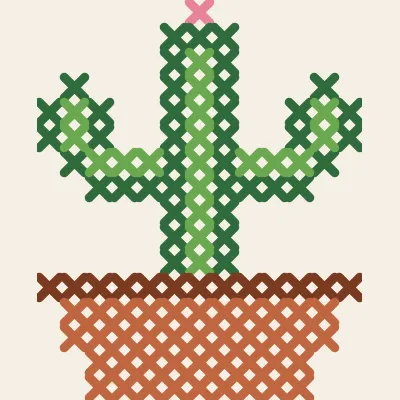
A flowering cactus in a terracotta pot, 13×16.
Why it works
Mostly straight vertical lines. The flower is one stitch, so add it last.
13 × 16 stitches · 5 colours · 112 stitches · about 0.9 × 1.1 in on 14-count
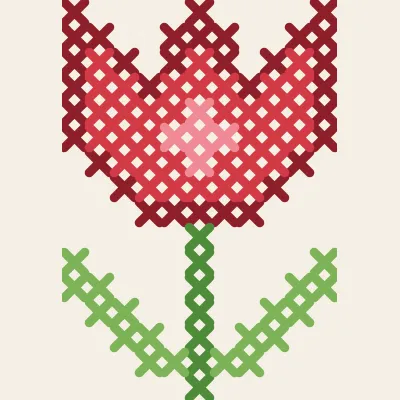
A single tulip with a long stem and two leaves, 11×16.
Why it works
Five colours; the stem is a single straight column, easy to count.
11 × 16 stitches · 5 colours · 98 stitches · about 0.8 × 1.1 in on 14-count
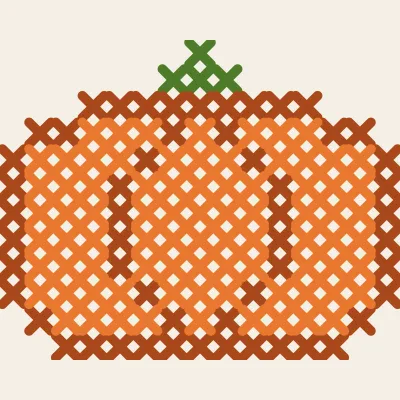
A ribbed orange pumpkin with a green stem, 15×12.
Why it works
Three colours in big areas. The ribs are straight vertical lines.
15 × 12 stitches · 3 colours · 140 stitches · about 1.1 × 0.9 in on 14-count
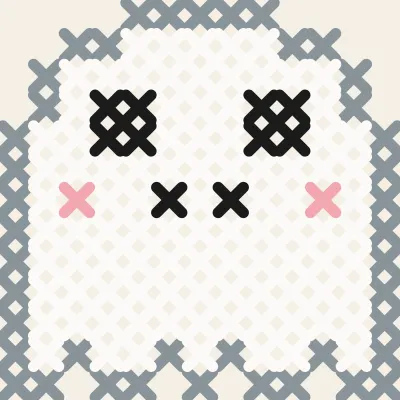
A friendly ghost with rosy cheeks, 13×13.
Why it works
Mostly one colour with an outline; the face is a few single stitches added at the end.
13 × 13 stitches · 4 colours · 149 stitches · about 0.9 × 0.9 in on 14-count
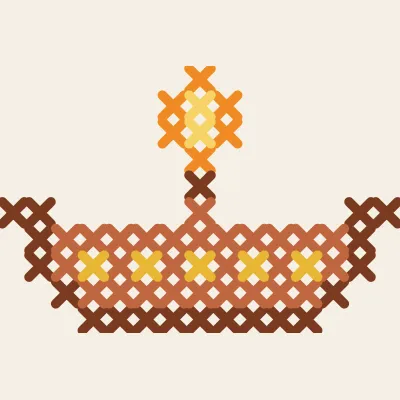
A clay oil lamp with a bright flame for Diwali, 15×10.
Why it works
Five colours in small areas. Stitch the flame from the tip down.
15 × 10 stitches · 5 colours · 60 stitches · about 1.1 × 0.7 in on 14-count
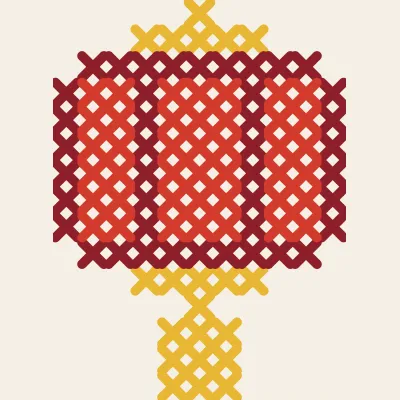
A round red lantern with gold caps and tassel, 11×15.
Why it works
Four colours, symmetric, and the ribs are straight lines.
11 × 15 stitches · 3 colours · 105 stitches · about 0.8 × 1.1 in on 14-count
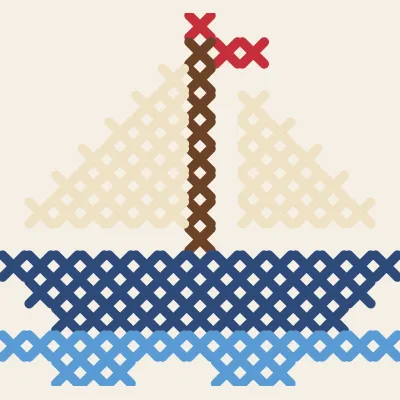
A sailboat with two sails and a red pennant on the waves, 15×14.
Why it works
Triangles and straight lines. The mast is a single column that helps you count the sails.
15 × 14 stitches · 5 colours · 107 stitches · about 1.1 × 1.0 in on 14-count
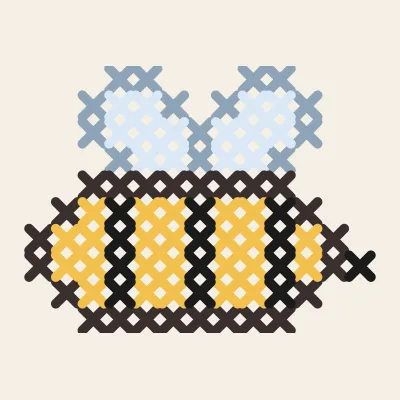
A striped bumblebee with light wings, 15×10.
Why it works
Stripes are short vertical runs; count each band carefully.
15 × 10 stitches · 5 colours · 89 stitches · about 1.1 × 0.7 in on 14-count
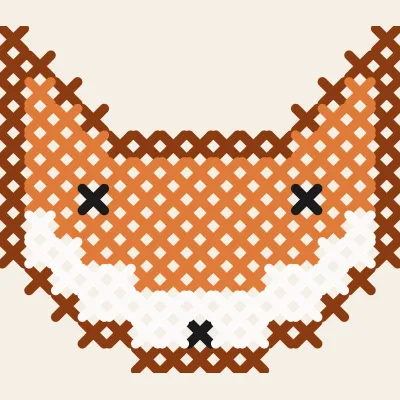
A fox face with pointed ears and a white muzzle, 15×13.
Why it works
Large triangles in four colours, perfectly symmetric.
15 × 13 stitches · 4 colours · 133 stitches · about 1.1 × 0.9 in on 14-count

“Welcome” in navy inside a gold geometric frame.
Why it works
Two colours and straight-line letters.
49 × 17 stitches · 2 colours · 390 stitches · about 3.5 × 1.2 in on 14-count
These “easy” designs add a few more colours, thin lines or single-stitch details.
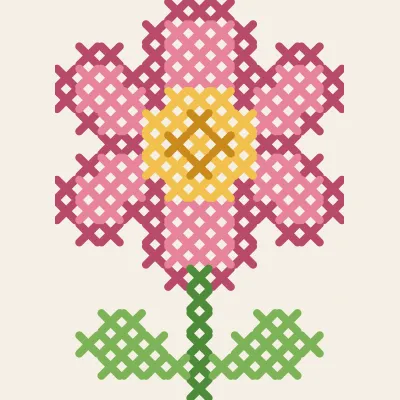
A pink bloom on a stem with two leaves, 13×18 stitches.
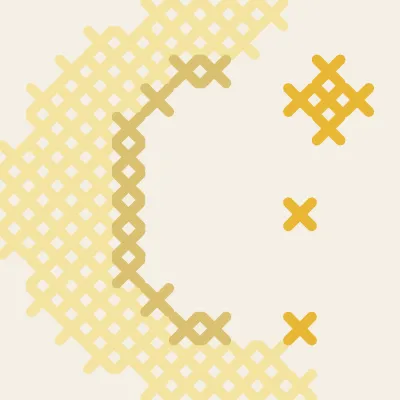
A crescent moon with four small stars, 14×14.
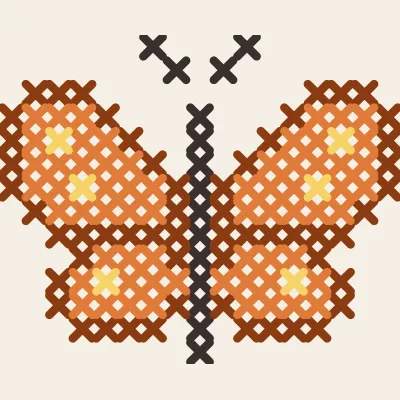
A symmetrical butterfly with spotted wings, 17×14.
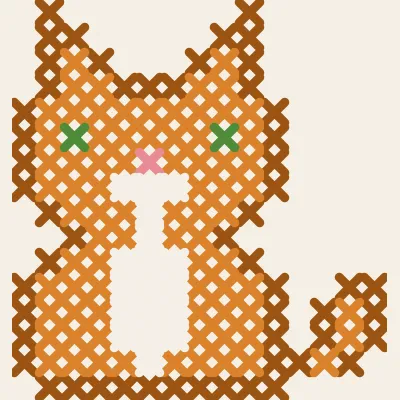
A simplified ginger cat with a white chest, 15×16.
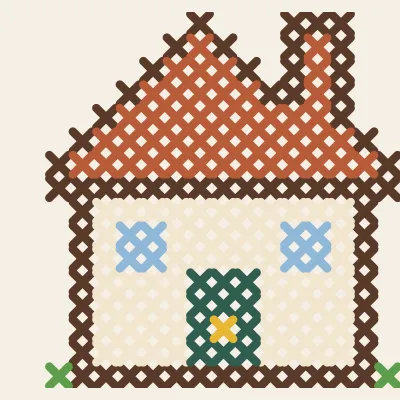
A small cottage with a chimney, windows and a door, 17×16.
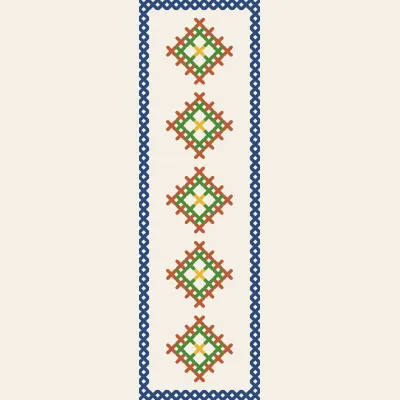
A 13-stitch-wide bookmark band of repeating diamonds.
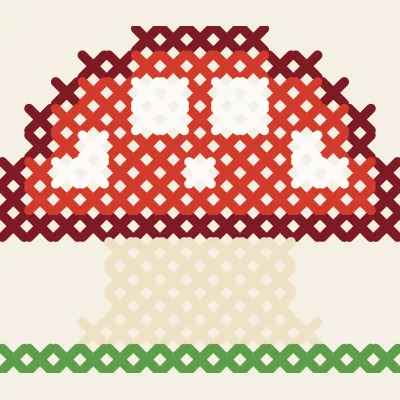
A red mushroom cap with white spots on a cream stem, 15×13.
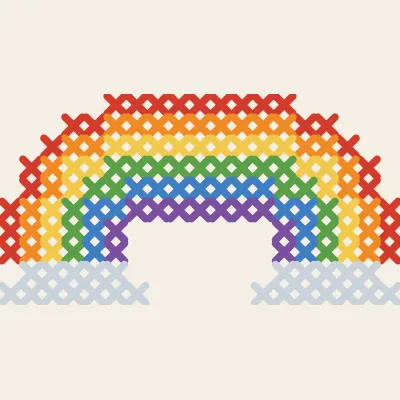
A six-colour rainbow arching between two clouds, 19×10.
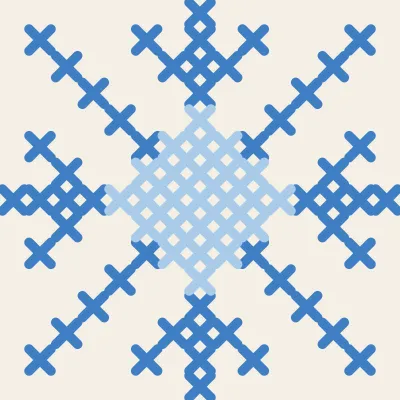
A symmetrical snowflake in two blues, 15×15.
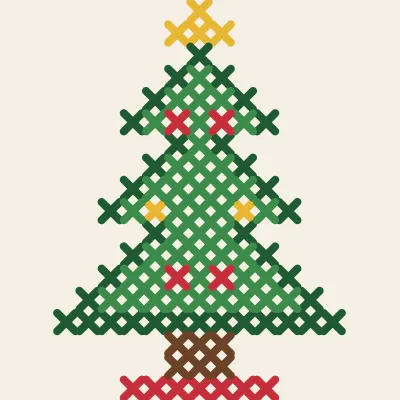
A decorated fir with a gold star and a red pot, 15×18.
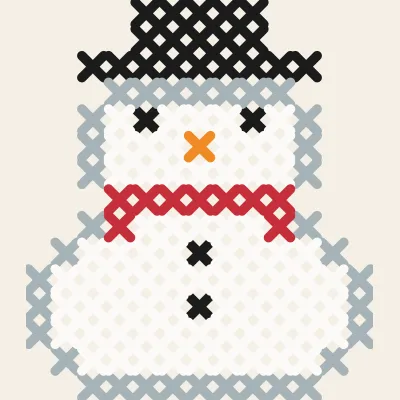
A snowman with a top hat, carrot nose and red scarf, 13×15.
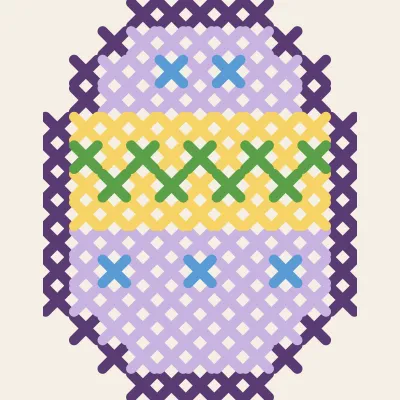
An egg with zigzag and dot bands, 11×14.
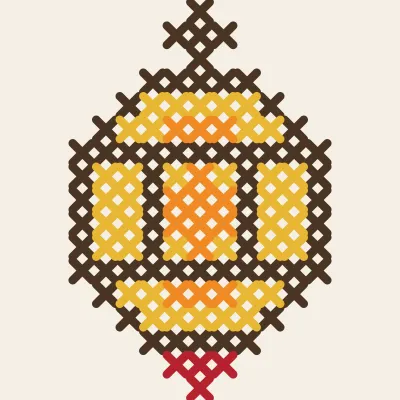
A glowing brass lantern for Ramadan and Eid, 13×17.
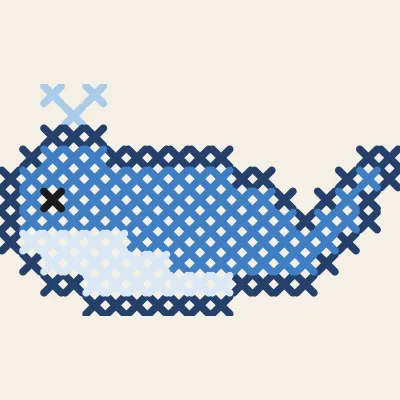
A smiling blue whale with a water spout, 19×11.
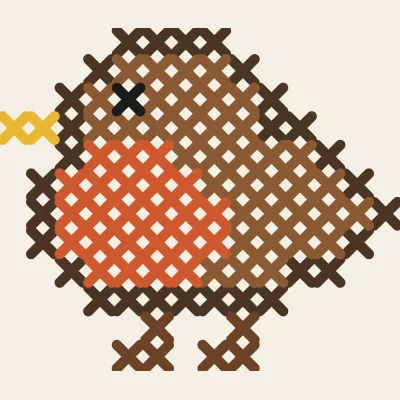
A round robin with a red breast, 14×12.
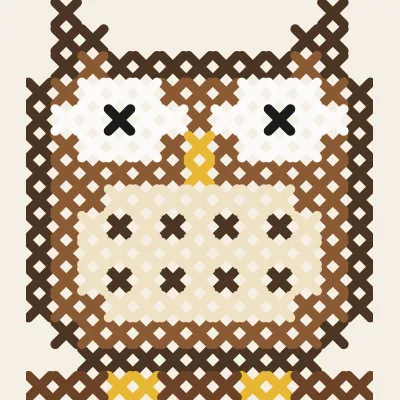
A round-eyed owl perched on a branch, 13×15.
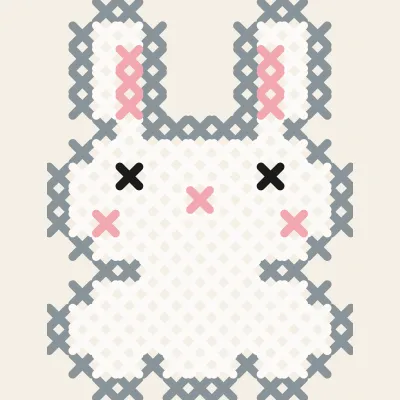
A sitting white bunny with long pink ears, 13×17.
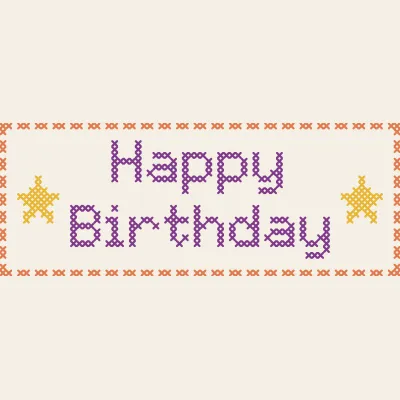
A two-line birthday message with gold stars and a dashed frame.
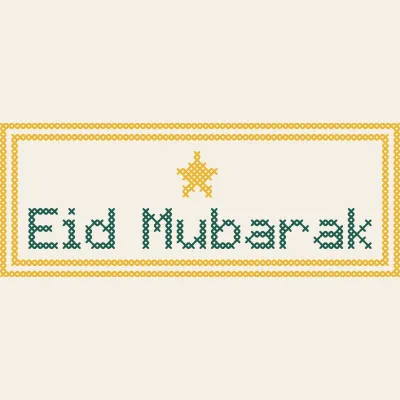
“Eid Mubarak” in teal with a gold star and double frame.